Brands once dictated things, things like consumer trends, purchase behaviours, social culture, even digital speak among other things through comms. More recently and in the year 2020, consumers, creators, entertainers and skit makers have taken charge, leading, identifying and dictating the roles that brands should and must play regardless of whether they align with the roles that those brands already mapped out for themselves. These new creators make up these new trends and brands are forced to either jump on it or sit on the bench watching it all play out. Either ways, consumers are moving away far too quickly for brands to catch up and consumers are moving again, too quickly to brands that they believe are quick on their feet, speak their language (No, I don’t mean translations to indigenous languages) and listen to them.
But therein lies the problem especially for brands with global affiliations or presence. They are not nimble enough to jump on trends, if they can jump on trends in the first place. There are too many stakeholders in the ideation process, approvals are not fast enough and by the time the nod comes, there is a new trend among consumers and creators and the world has since moved on. Therefore, the previous high handed and aloof approach by brands towards consumers has somehow, without anyone realising, evolved into a symbiotic relationship of consumers-creators-brand team in that order. The brand team role is now largely limited to cultural/political correctness, brand fit and responsible marketing checks.
Here’s why I think that the creator culture has not been fully hacked or explored by brands in Nigeria (Only a few brands have cracked this code – insert Cowrywise). Communication and marketing agencies largely create content and pass it on to these creators to execute. Now while there is nothing bad in that, it curbs creativity and doesn’t allow a free flow of ideas in what should be a co-creation process especially when the brands also expect to ride on the digital strength (clout) of these new partners. The creator is therefore limited in creating something true to brand or character and therefore, may not move the market in the expected direction. The end product is always too commercial. Like all advertising or promotions before it, it soon becomes great for another round of oh-I’ve-seen-the-skit/ad-its-nice.
The sad part is that many creators in Nigeria do not also understand the nuances of marketing communications nor of brand, culture, ethics and fit. Many of them just want to make money quickly. It is then difficult to entrust a brand’s success entirely to their creativity especially with brands that are big on responsible marketing.
Shalaye Culture among Brands in Nigeria…
The Nigerian social media space has always been an intriguing one for me, largely because virality can be instant and you are just a (re)tweet away from an online trend that could mean instant popularity (good or bad). Even more interesting is how recently, global brands and personalities are quite eager and ready to interact with Nigerian Twitter and its jovial spirit – cue in Jack, Enisa and more recently, ASOS.
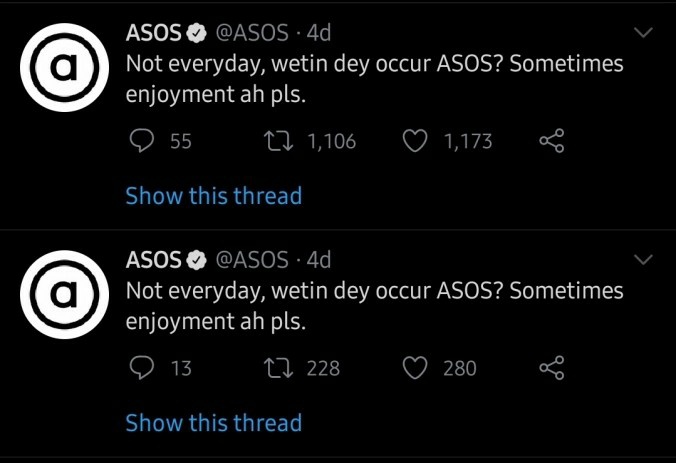
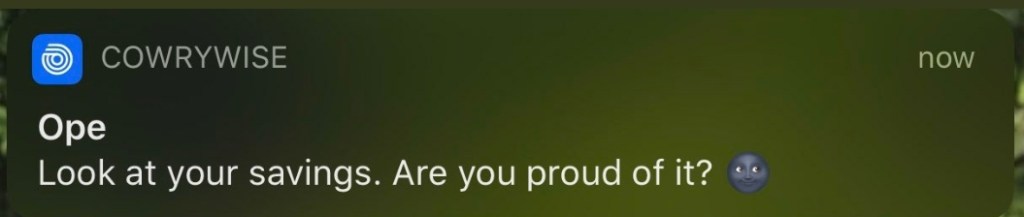
The Nigerian cruise (spirit) is slowly gaining confidence, within and outside. Yet brands within the country are keeping engagement with it at a level I can only describe as nearly detached. Almost afraid, even. While Ope from Cowrywise is gaining respect among the Nigerian audience and has hacked the Nigerian social culture and speak, other brands within are either sidestepping it entirely or trying to Westernize it, thereby dampening it. All of which make the Nigerian content creator the go-to for the audience especially because their stories and content are more relatable and attempt to appear posh is minimal.

Here’s another thing about brands in Nigeria. There’s this strong urge to shalaye. Explicitly. It’s almost as if the Nigerian consumer needs to be schooled on why a particular campaign is running. Post captions be like News headline. Oh as a digital manager, I am guilty of this as well. The interesting part is that even for brands with global marketing presence, once in Nigeria, the urge to shalaye suddenly becomes even stronger. There’s the assumption that concepts cannot be easily understood especially when they are concepts developed by a global team and which have gone through localisation. Take for example.
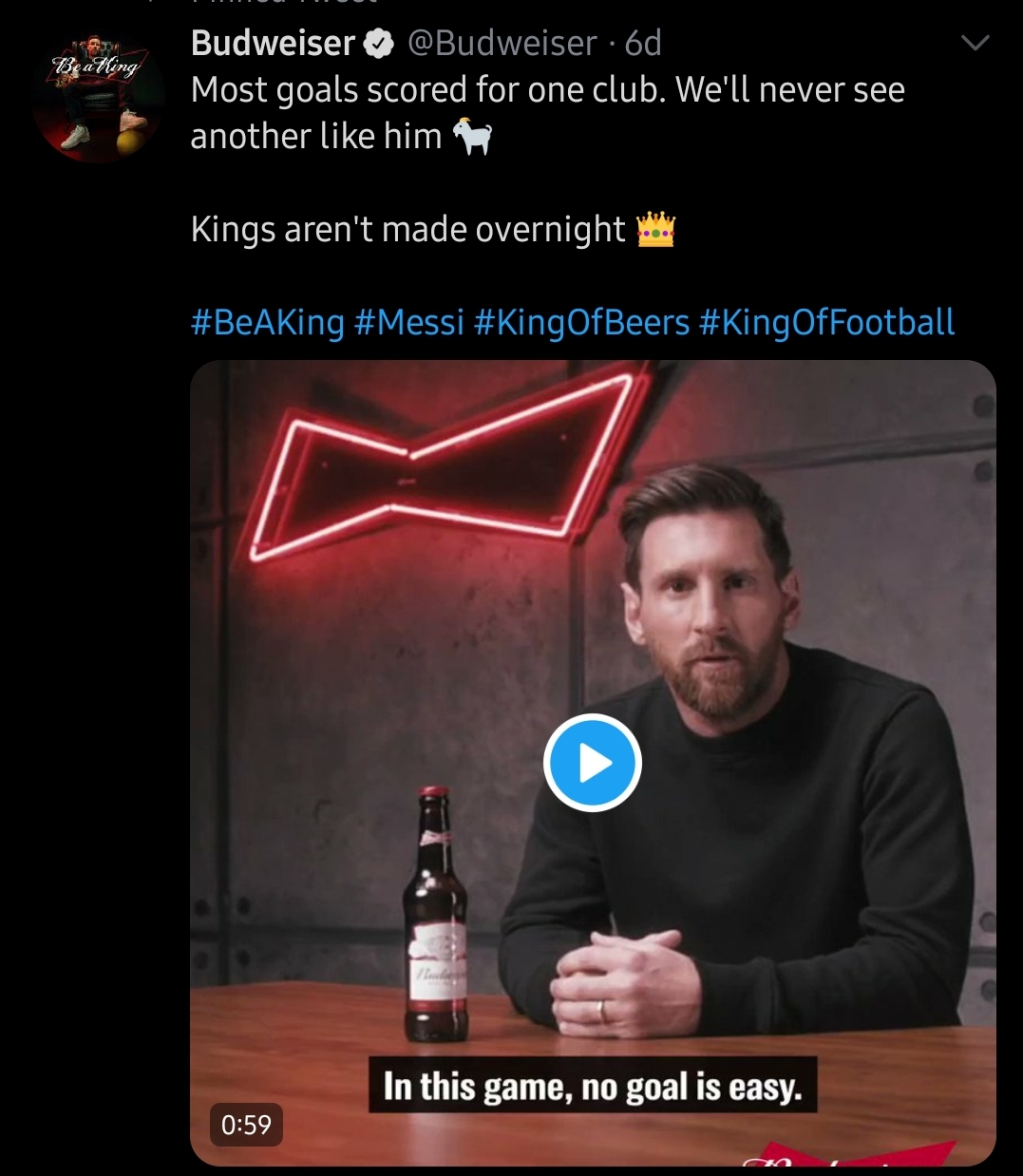
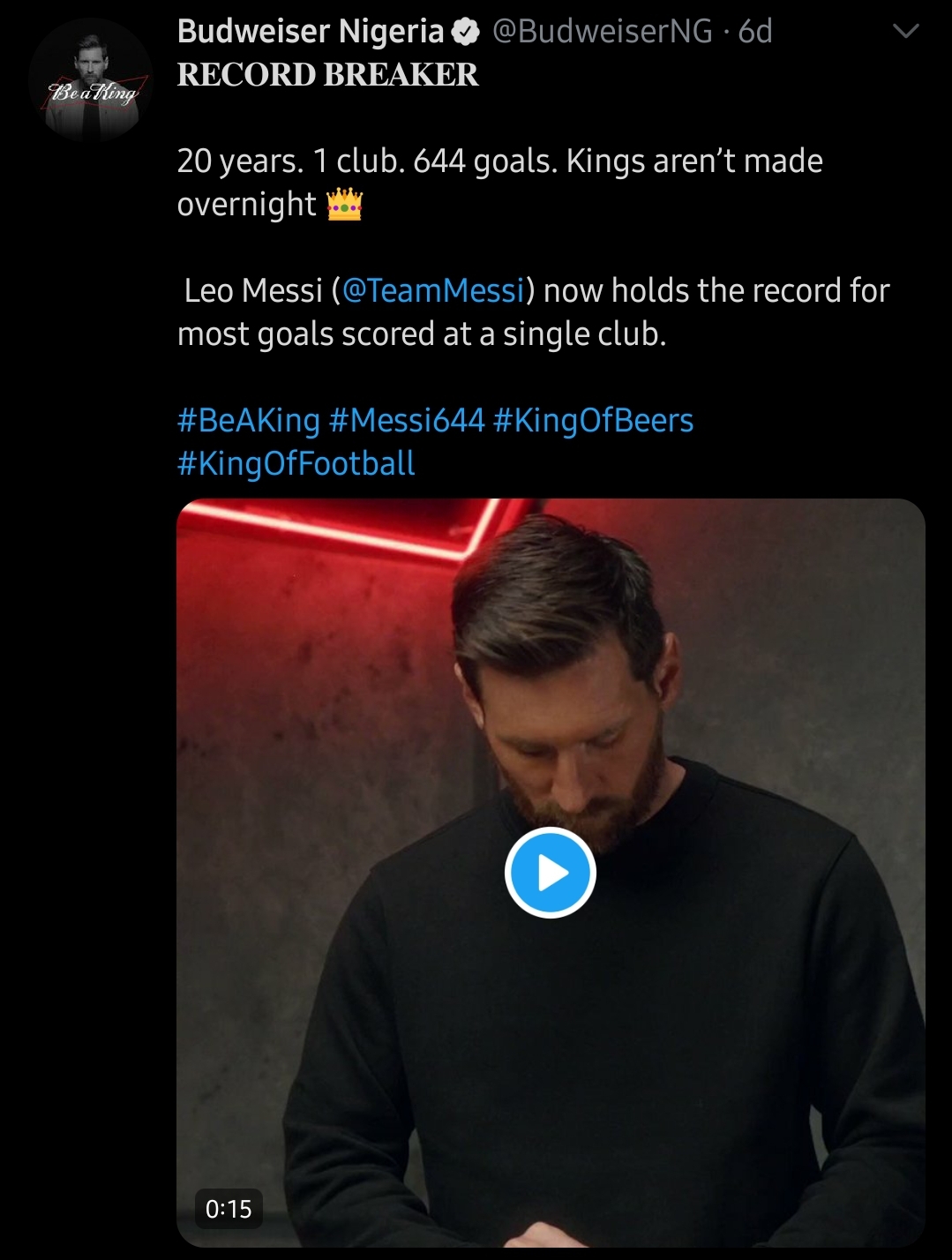
There is this Bud ad currently running – Messi autographs (or is he sending) limited edition Buds to all the goalkeepers he had scored against in his football career at Barcelona. 644 goals. 644 limited edition Bud bottles to 160 goalkeepers. Knowing how small the world of football is, and how often footballers switch employers, it’s worthy of say that one of the best footballers in history (football fans please stay away) had spent 20 years in one club (rare occurrence in football). Every football lover knows this. The ad wasn’t about the beer, it was about the man. Legacy, longevity, consistency. A hi-boys-I-scored-a-goal-today-drinks-on-me. However like every ad that gets localised, seeing this caption felt like reading some credential recitation. Shorter would have been sweeter.
I tried to imagine how a Nigerian creator would have couched it. It would have been marinated in true Nigerian spirit. Something like:
Nobody:
Absolutely nobody:
Messi to goalkeepers: “Guy, if I score, I’ll give you a bud. Deal?
Needless to say, more creators need to come aboard agency and brand side in order to create and enable a more open, natural and inclusive environment for brands and consumers to interact while keeping in spirit with the Nigerian. Las las, Nigeria is the market and Nigerians are the buyers. The least we could do is to make communications in tandem with existing digital culture and speak in order to unlock more genuine interactions.
 Taiwo Odumala's Blog